




Subscribe to Newsletter
Enter your email address below and subscribe to our newsletter

You are the investigator

An overview of the most significant developments in criminal law in Germany.
An overview of the most significant criminal law developments in Germany: from international cyber fraud networks to organized telephone fraud rings and legally binding judgments in cold case proceedings.
Chapter 1

International networks, phishing, covert subscriptions, bank robbery verdicts

Shock call gangs, convictions, extraditions, police operations

Terrorism, drug smuggling, CSAM investigations, cold case, Federal Court of Justice decision
Cyber fraud — Koblenz
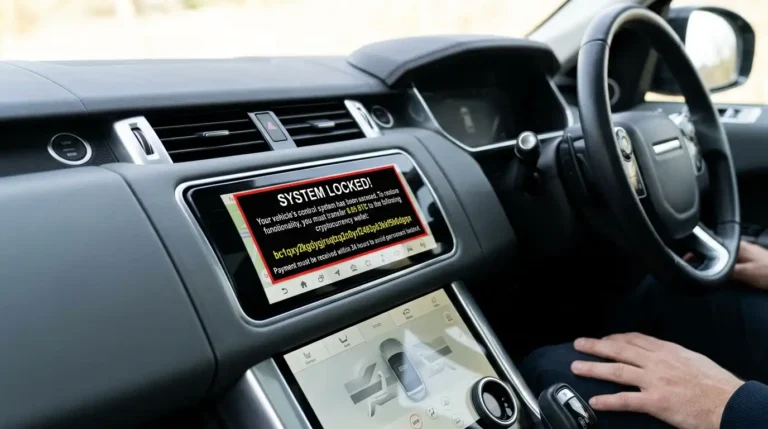
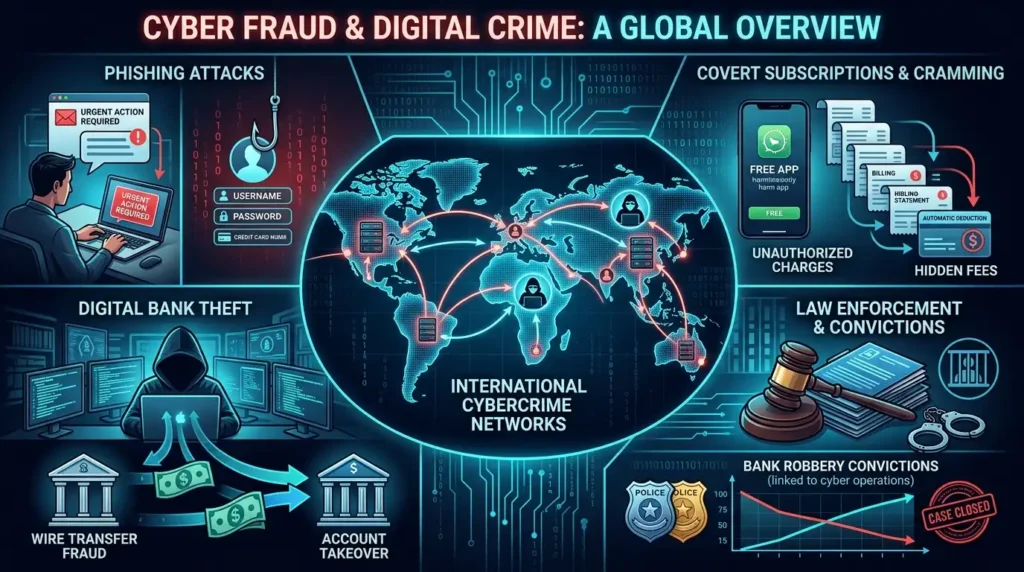
The Koblenz Public Prosecutor's Office has filed charges against nine members of an international network. According to the investigation, the accused obtained the card data of over [number missing] people through phishing and manipulated deceptive websites. 3 million cardholders from 193 countries. Furthermore, they are expected to be more than 18 million hidden subscriptions The case has been completed — resulting in total damages exceeding 260 million euros. Six of the nine defendants are currently in pretrial detention. The trial is considered one of the largest cyber fraud cases in the history of the German justice system.
Determined financial damage to the international network
Compromised in 193 countries worldwide
Completed without the victims' knowledge
Of nine network members charged
The dimensions of the Koblenz case illustrate the global scaling of modern cybercrime: perpetrator structures operate across national borders, dividing labor and using industrialized methods for the mass compromise of payment data.
Insider crime — Berlin
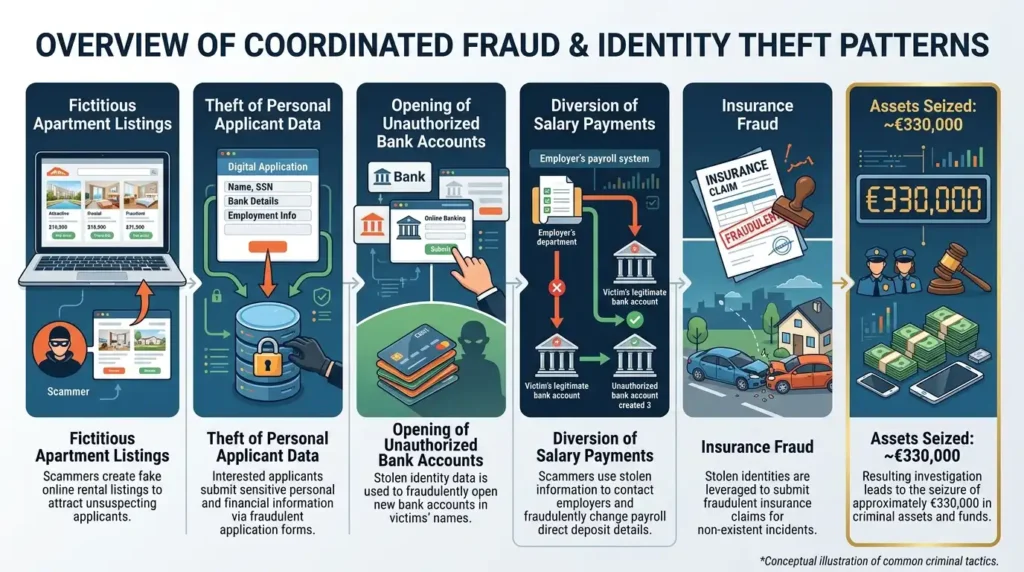
The Berlin Regional Court has sentenced a 37-year-old former police officer to 4 years and 10 months imprisonment convicted. The charges included 59 counts of commercial fraud and 9 counts of computer fraud.
The convicted man placed fake apartment advertisements, obtained personal data from prospective tenants, and misused this data to open accounts, divert wage payments, and commit insurance fraud. The court ordered the confiscation of approximately 330,000 euros The verdict is not yet legally binding.
Chapter 2
Shock call gangs specifically target elderly and vulnerable people. The perpetrators impersonate relatives in distress or government officials and exert emotional pressure to obtain cash payments or valuables. The following cases document recent investigative successes.
Shock call verdicts — Frankfurt
Leading gang member; active role in making shock calls to family members by feigning emergencies.
Also sentenced to six years in prison; responsible for communicating with victims and coordinating money collectors.
Lesser involvement in the crime compared to the main perpetrators; nevertheless, fully attributable to the gang structure.
The gang used emotional manipulation techniques to put pressure on elderly people and entice them to hand over cash or valuables — a phenomenon widespread throughout Germany.
Delivery — Offenbach/Romania
A 39-year-old man and a 39-year-old woman from Offenbach, Germany, were arrested in Romania and extradited to Germany. They are suspected of being part of an international group that pressured victims with fabricated traffic accidents to extort money. The case underscores the cross-border nature of organized telephone fraud networks.
Raid — Halle/Saalekreis
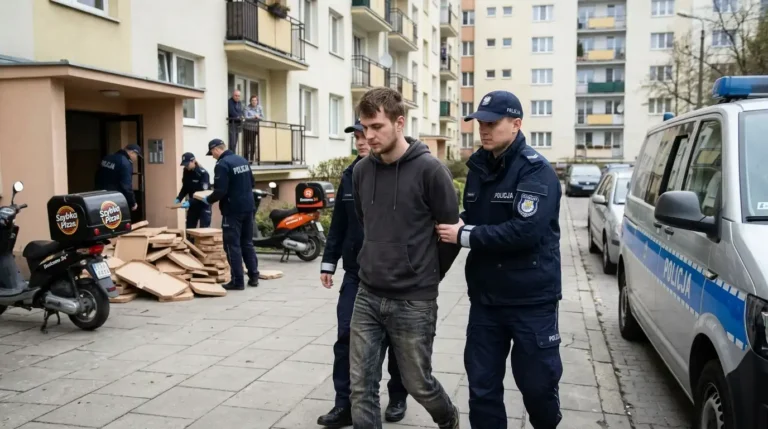
As part of an investigation into scams involving individuals impersonating police officers and bank employees, police searched several properties in Halle and the Saalekreis district. Among the seven suspects, aged... 15 to 24 years Five people were arrested—four of them on outstanding warrants. The case highlights the increasingly young perpetrators in organized fraud rings.
Chapter 3 — Further Priority Procedures
The December robbery of a savings bank branch in Gelsenkirchen is developing into extensive civil proceedings: In August 2026, victims had already filed a lawsuit. 18 civil lawsuits A complaint has been filed against the credit institution. 3,000 lockers The bank was forcibly opened – an unprecedented incident of this magnitude in the German banking sector. The focus now is on the bank's liability to the affected customers and the amount of potential compensation payments.
The actual crime occurred in December 2025. The civil and liability scandal only fully unfolded from August 2026 onwards.
Organized crime
48 years old; sentenced to the highest total prison term as the head of the network.
Leading role in the logistics and transport of the drug quantity.
Subordinate function within the smuggling organization.
The case concerns the import and distribution of more than seven tons of cannabis by a supra-regional network with ties to Berlin and Brandenburg. The verdict is not yet legally binding; appeals are possible.
terrorism
Eight defendants received prison sentences between 1.5 and 5 years. According to the court and the public prosecutor's office, the group planned violent attacks on refugees and political opponents.
Charges:
This trial is part of a series of investigations into right-wing extremist networks operating on the basis of so-called "prepper" and coup ideology. The Hamburg verdicts send a clear signal regarding the prosecution of ideologically motivated violence—even in the preparatory stage.
Law enforcement agencies emphasize the importance of early intervention in relevant network structures.
CSAM investigations — Halle
Investigators from the Halle police and the Saalekreis district searched a total of 35 objects As part of an investigation against 36 suspects accused of distributing and possessing material related to sexual violence against children (CSAM), numerous data storage devices were seized during the searches.
Coordinated operation in Halle and the Saalekreis district against 36 suspects
Cases of immediate danger to children identified during the searches
Securing evidence related to weapons and drug offenses as a secondary finding
Federal Court of Justice (BGH) decision
The Federal Court of Justice (BGH) issued a ruling on August 20, 2026 The life sentence in the 2000 Munich murder case of a mother of four has been definitively upheld. The convicted man's appeal was rejected in its entirety – the verdict is therefore legally binding.
The conclusion of this case after more than two decades underlines the persistence of German criminal prosecution, even in long-past serious crimes.