






Subscribe to Newsletter
Enter your email address below and subscribe to our newsletter

You are the investigator
The truth is: We all want to believe that there is a system that works. And as long as we believe that, there will be those who sell that hope – down to the last euro.
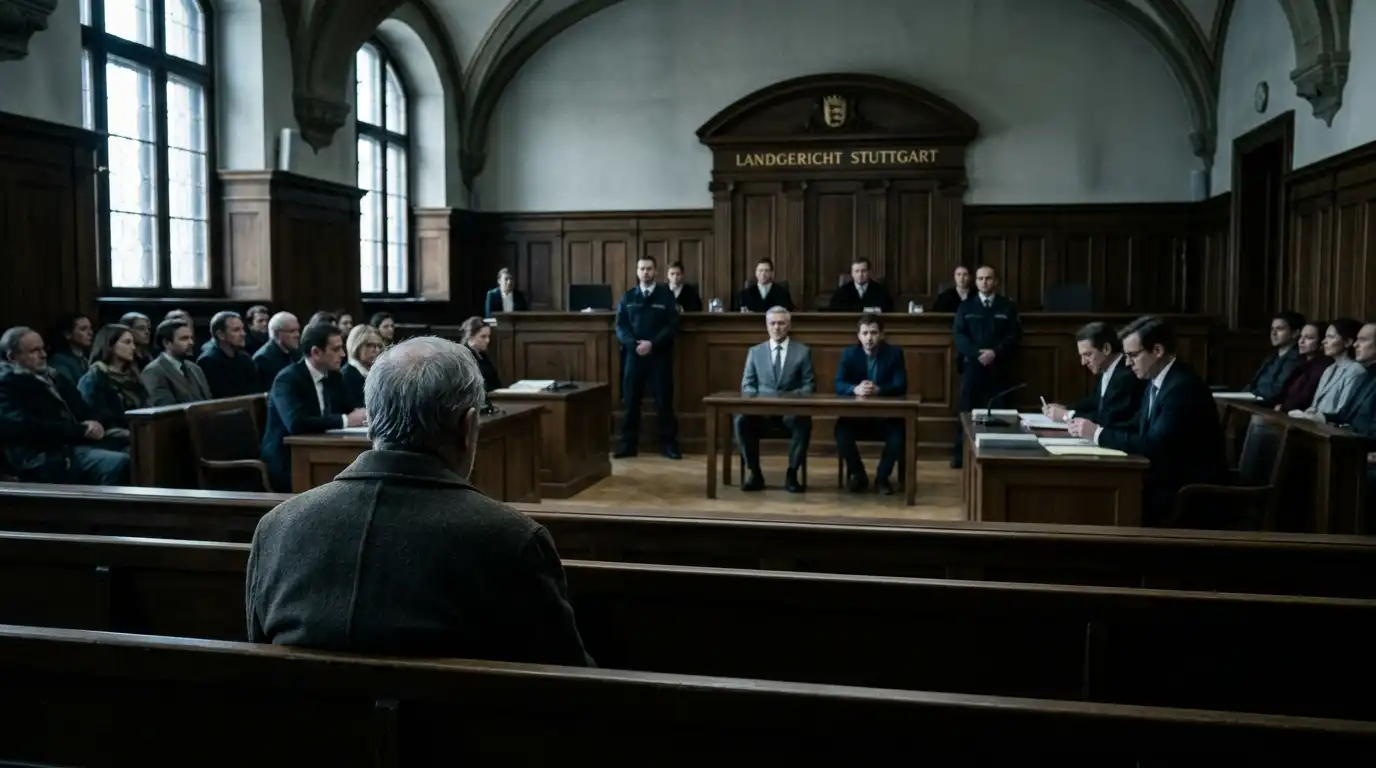
There is a moment in every case of major fraud—Arthur Ringer had learned this—when the truth begins to crack like ice in spring, and the questions come faster than the answers. This was that moment. The trial against Marcus Keller and Stefan Reinhardt had just begun, and in the dock sat two men whose lives depended on the system they had created not being completely dismantled.

DISCLAIMER: This story is a work of fiction written in a literary style and is intended solely for educational purposes. Names, places, characters, and institutions are fictitious. Any resemblance to real persons, companies, or events is purely coincidental. This article aims to raise awareness of fraudulent methods and pyramid schemes but does not replace professional financial advice. Investors are strongly urged to thoroughly review their investments, seek independent financial advice, and verify the regulation of financial companies.
It would be taken apart.
Ringer sat in the back row of the Stuttgart courtroom, observing the defendants—not on official business, but out of a personal necessity he could scarcely explain. He was retired. But for someone like Ringer, retirement didn't mean rest, but simply a different kind of work: inner work, asking the questions the justice system doesn't ask.
Marcus Keller was sixty-four years old. A handsome man, one had to admit—silver in his hair, the bearing of a man accustomed to being noticed in rooms. He wore a dark gray suit, the same one he probably wore on the days when he presided over meetings with investors, shaking their hands and assuring them that their future was in good hands.
Stefan Reinhardt was younger—forty-nine—with the nervous smile of a man who knew he had been betrayed, probably by the people he trusted most. In such cases, Ringer had learned, the betrayal was often mutual. Neither was truly guilty, and yet both were.
The story that unfolded in this courtroom was an old story, retold in a digital age. Fifteen years earlier, the prosecution said, Keller and Reinhardt had founded a company—Celestial Sports Investments—that offered investors a dream. A perfect dream. The dream of money working for you while you slept. The dream that the world of high finance had a secret door that opened only for those with the right network, the right connections.
The company offered investments in professional football. The dream was cleverly chosen. Football is one of the few areas of the modern economy where emotional and financial investments intertwine, where desire and money are indistinguishable. People like money. But people love football. Celestial Sports Investments wasn't just selling returns; it was selling belonging to something big, something cultural, something real.
The promised returns were modest, too modest to raise red flags – six to ten percent per year. In a world where bank accounts offered barely two percent, this wasn't implausible. It wasn't greedy. It was smart. It was what everyone was waiting for.
Around 250 people bought in. A plumber from Hanover. A doctor from Munich. A widow from Stuttgart who wanted to invest her late husband's pension. People with money, but not much. People seeking security, not wealth. People who believed—because we all believe—that there is someone who cares, that there is a system that works.
There was no system. There was only Marcus Keller and Stefan Reinhardt.
What fascinated Ringer – and what the prosecution barely attempted to address – was not the perpetrators, but the psychological architecture of the fraud itself. The prosecution focused on the facts: that the company was already in financial trouble, that the defendants knew it was a Ponzi scheme, and that they continued to collect money while the company collapsed.
But those were only the outer lines. The inner truth was more subtle.
Keller and Reinhardt hadn't actually started with malicious intent – that was Ringer's suspicion, and it was confirmed during the trial, even if never explicitly stated. They had begun making investments. Real investments in real football projects. In a moment of confidence, they had tried to do it right. But then – and this was the crucial moment – they lost money. Not a little. A lot. The world of high finance is unpredictable. Even the smartest people lose.
And in that moment of realizing their losses, Keller and Reinhardt saw a way out: a Ponzi scheme. Not a Ponzi scheme in the classic sense—not immediately. But simply this: new investors bring in money to pay off old investors. Only for a while. Only until the investments recover. Only until the next big opportunity comes along.
The next opportunity never came.
Instead, they turned to foreign exchange trading. According to the prosecution, Keller and Reinhardt began investing investors' money in highly speculative foreign exchange trading—the most volatile, riskiest area of the financial market. They promised returns of five to twenty percent per month. These figures were absurd. Anyone with a modicum of financial knowledge would have known they were absurd. But absurdity is attractive when you're desperate. Absurdity is believable when it comes from someone who looks you in the eye and assures you that they know what they're doing.
The investors – many of them – didn't ask questions. They didn't want to ask. Questions mean doubt. Doubt means fear. And fear was the last thing anyone wanted to feel in a world of returns and profits.
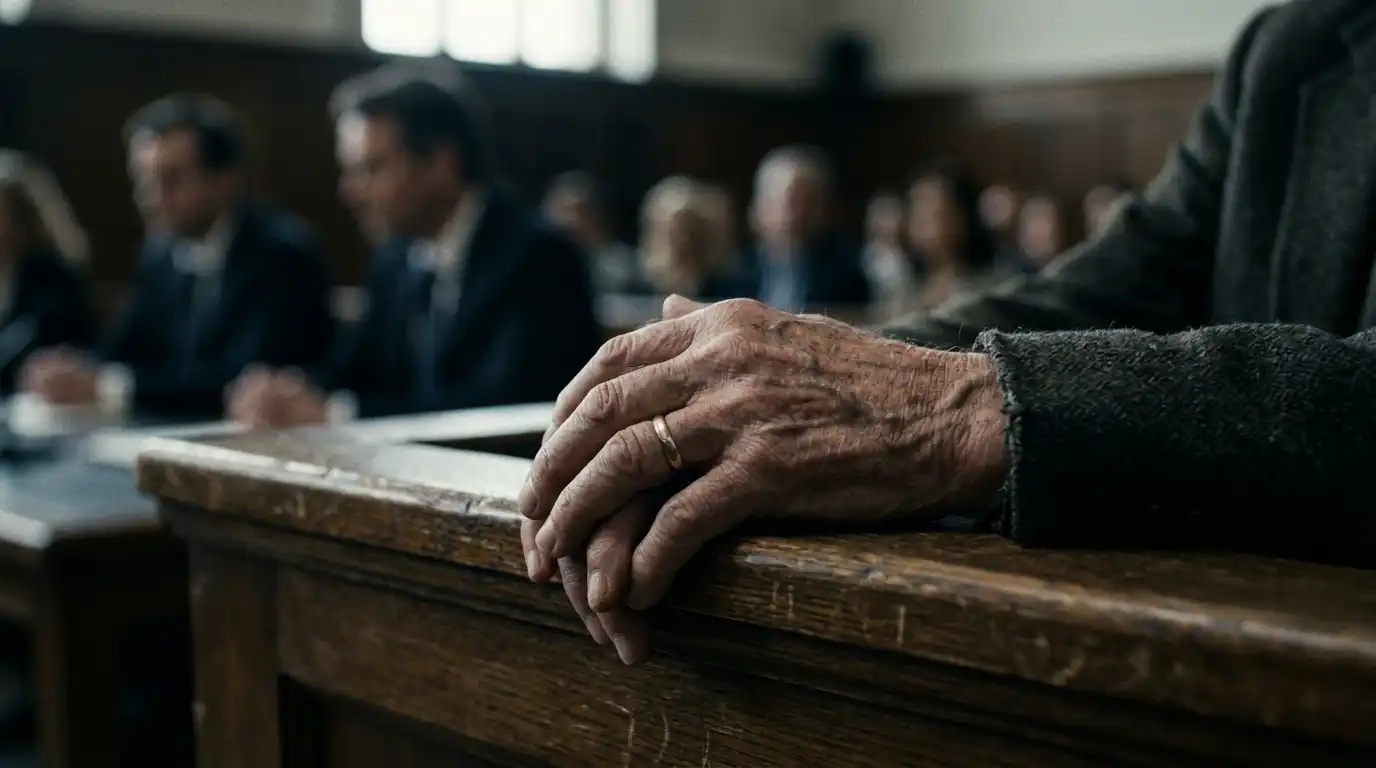
The doctor from Munich, whose name in the court records was Friedrich Hesse, testified in the witness stand. He was bankrupt a month after opening his account. His savings – two hundred thousand euros, a lifetime of saving – were gone. He sat in the witness stand and stared at his hands, as if they could tell him how he had allowed this to happen.
„You trusted them?“ asked the defendants’ lawyer, an intelligent man whose job it was to defend the impossible to defend.
„Yes,“ Hesse said simply. „I trusted them.“
„"Why?"“
Hesse looked up. His eyes were empty. "Because that's what you're doing. You're giving your money to someone, and you're trusting that person won't steal it."„
The lawyer nodded as if Hesse had just finished his defense. The doctor concealed the unspeakable: that the dream of a stable life, of learning, hard work, and then reward—this dream was so deeply ingrained in him that the deception didn't destroy his trust, but rather confirmed that the dream itself was a lie.
Marcus Keller testified. An intelligent man, articulate, with the charm of a salesman who knows how to sell ideas. He admitted that he knew the system didn't work. He admitted that he knew the returns were unrealistic. But he also said something that created an eerie silence in the courtroom:
„I believed it could work. I believed in the investments. I believed in the next opportunity. Anyone who works in a system like this believes in the next opportunity. Opportunity is the only thing that keeps you going.“
It wasn't an apology. It was a reaffirmation of what Ringer already knew: that the difference between fraud and a business model is only a matter of time. As long as the illusions work, it's called innovation. As soon as they shatter, it's called fraud.
The trial ended as such trials often do: with verdicts deemed sufficient by the justice system. Keller and Reinhardt were convicted. Some of the money would be returned—not all of it, of course. It was long gone, lost in the deep pockets of opaque structures.
But the real condemnation was more subtle. The investors—two hundred and fifty people—had to live with the fact that the security on which their lives had been built had been illusory. Friedrich Hesse, the doctor, would never retire as he had planned. The widow would not save her pension for her grandchildren. The plumber would work until his hands could no longer obey him.
They were the ones who were truly condemned.

Ringer, as he left the court, posed the final question – not to the courts, but to himself:
🟢How many pyramid schemes are operating right now, at this very moment? How many people are sitting in offices knowing the numbers won't add up, that the illusions will crumble, but still hoping for the next opportunity? How many people are handing over their money and trusting because distrust means living in a world of fear?
The line between greed and hope is thinner than we think. The line between fraud and legitimate business is thinner than the justice system is willing to admit. And the line between victim and accomplice is thinner than anyone is prepared to acknowledge.
The truth is: We all want to believe that there is a system that works. And as long as we believe that, there will be those who sell that hope – down to the last euro.