





Subscribe to Newsletter
Enter your email address below and subscribe to our newsletter

You are the investigator

August 1996.
Belgium is at a standstill. The entire country is in mourning and simultaneously in rage. Thousands of people are marching through the streets in white processions. They are demanding answers. Because what is now coming to light defies all imagination.
The case Marc Dutroux It is still considered one of the most horrific crimes in post-war European history — and one of the most heavily covered up.
Marc Dutroux, a repeat sex offender, was convicted of raping minors in 1989 — and released early in 1992. Just four years later, his true horror began.
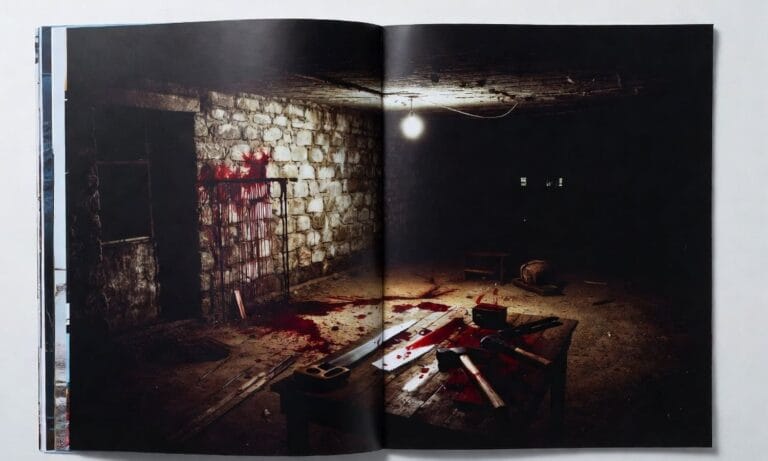
Between 1995 and 1996, Dutroux, along with his girlfriend Michelle Martin and accomplices, kidnapped several girls aged 8 to 19. He held them captive in a makeshift dungeon in the basement of his house in Marcinelle.
Two of the girls — Julie Lejeune and Melissa Russo (both 8 years old) — starved to death in agony because Dutroux was in prison and his wife didn't care for them. The other two — Sabine Dardenne (12) Laetitia Delhez (14) — were freed alive after months of torture.
What investigators found in Dutroux's house brought even hardened police officers to tears:
Dutroux later confessed that he had intended to sell the girls to an international pedophile network. He provided names and addresses—but these leads were never properly pursued.
This is where the real scandal begins, which shocked all of Europe:
The population no longer believed in the state. Over 300,000 people marched through Brussels in 1996 in the "White March" — the largest demonstration in Belgian history.
The major trial began in 2004. Dutroux was sentenced to life imprisonment. His wife, Michelle Martin, received a 30-year sentence (later released early). Other accomplices received lenient sentences.
But the major masterminds behind the scenes—if they existed—remained untouched. To this day, there is no complete investigation into who was involved in the network.
Marc Dutroux remains in prison. He repeatedly applies for early release—so far without success. Parts of the case file are sealed until 2060. Many documents have never been released.
The surviving victims, Sabine Dardenne and Laetitia Delhez, live in seclusion and try to cope with the trauma. The parents of the murdered girls continue to fight for a full investigation.
The Dutroux case represents more than just the actions of a monster. It represents... State failure, for corruption in the highest circles and for the powerlessness of ordinary citizens in the face of powerful networks.
Many Belgians still believe that the case was deliberately covered up to protect influential people. Whether that's true will probably never be definitively clarified.
Question: How many victims did Dutroux really have?
Answer: He was convicted of six kidnappings. There are indications of significantly more victims.
Question: Was there really a pedophile network?
Answer: There is strong circumstantial evidence and witness testimony, but no final legal ruling.
Question: Why was so much covered up?
Answer: Officially, it's a "system error." Critics speak of deliberate sabotage to protect influential people.
Question: Is Dutroux still alive?
Answer: Yes. He will still be in prison in Belgium in 2026.
The Marc Dutroux case shocked all of Europe not only because of its cruelty, but above all because of the subsequent cover-up. It showed how deeply evil can penetrate the structures of society—and how difficult it is to expose it.
More than 25 years later, it remains an open memorial: As long as the full truth does not come to light, there is no real justice for the victims and their families.
Further links:
You are the investigator.
Sometimes the darkest crimes are not the ones you see — but the ones you deliberately choose not to see.