






Subscribe to Newsletter
Enter your email address below and subscribe to our newsletter

You are the investigator

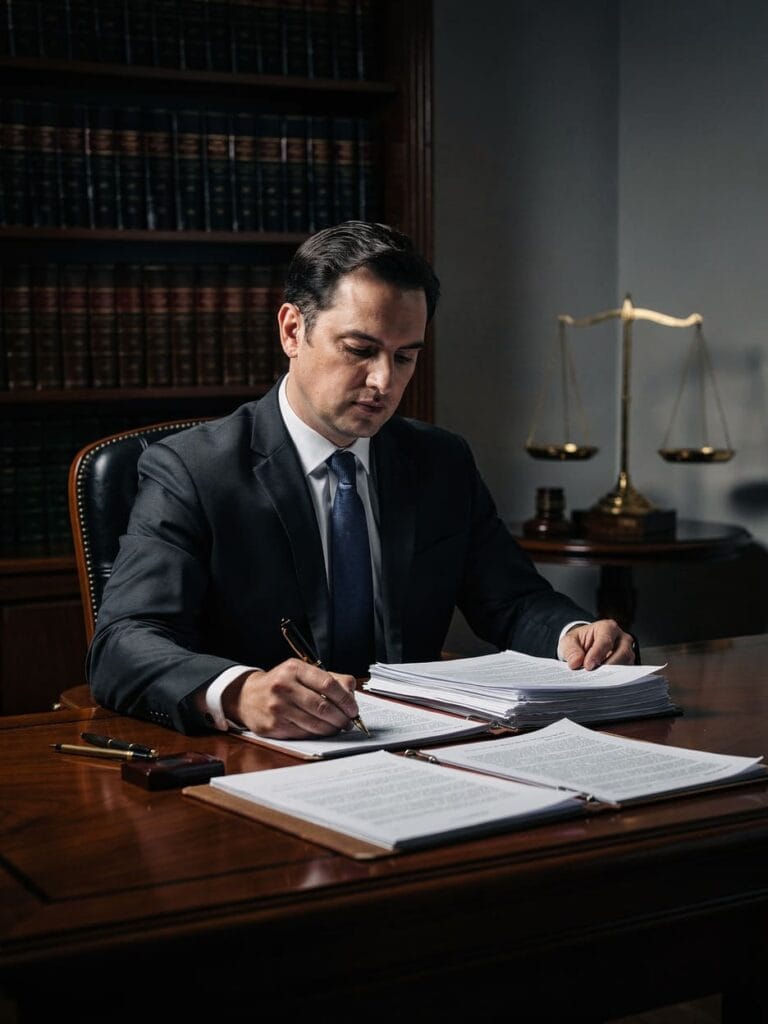
Fraud is one of the most common crimes in modern society. As a lawyer, I encounter cases daily in which people fall victim to deception – from classic scams to sophisticated digital frauds. This presentation analyzes the legal aspects of fraud, explains typical schemes, and outlines how to protect yourself and what to do if you have already been a victim.
Fraud is the theft of another person's property or the acquisition of rights to another person's property through deception or abuse of trust. The defining characteristic: The perpetrator obtains the property. voluntarily from the victim himself – but through fraudulent means.
The important distinction is between fraud and a civil dispute. Borrowing money and not repaying it doesn't necessarily constitute fraud – it might simply be a breach of a loan agreement. Fraud, however, requires... original intention Preceding deception.
The perpetrator knowingly misleads the victim or exploits their trust.
The victim personally hands over valuables or signs documents.
The perpetrator acts with the aim of personal enrichment.

Despite sensational revelations, pyramid schemes continue to flourish. Organizers promise incredible returns and pay out funds from new depositors to the first participants to create an illusion of success. When the influx of new victims dries up, the system collapses.
Investment fraud disguises itself as legitimate business. Scammers offer investments in non-existent projects, counterfeit securities, or "unique opportunities." They frequently use fake licenses, fictitious documents, and shell companies with offices.
This includes taking out loans with forged documents, using other people's data, or setting up fictitious companies to obtain large loans without any intention of repaying them.
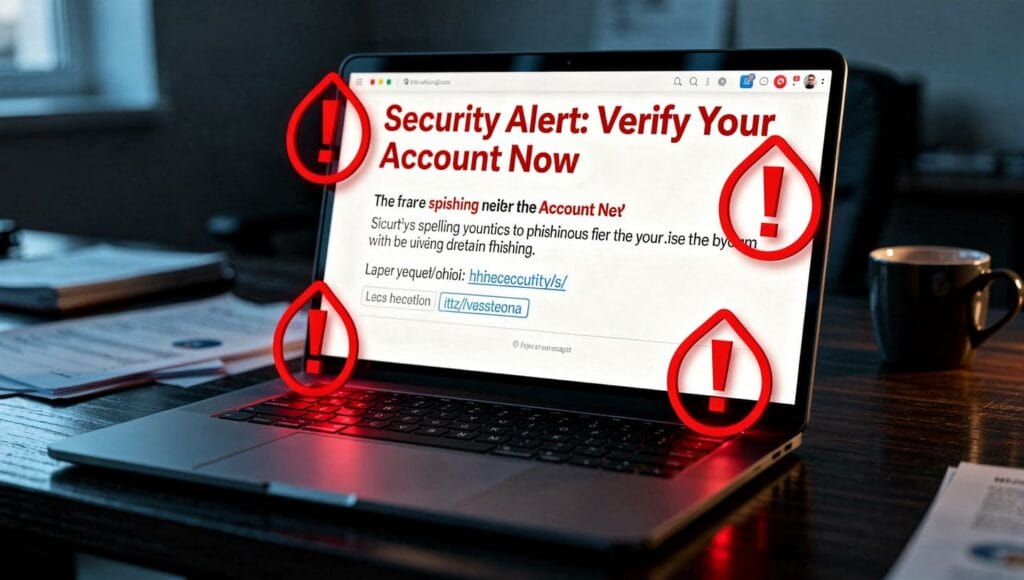
One of the most common online threats. Scammers send emails or messages impersonating banks, government agencies, or well-known companies, stealing logins, passwords, and card details. Fake websites look almost identical to the real ones.

Traditional calls "from the bank" or "from the police" have been supplemented by schemes involving "relatives in distress," "lottery winnings," and "account freezes." Perpetrators use social engineering, exert psychological pressure, and demand immediate action.

Sellers collect advance payments and disappear; buyers request returns for non-existent goods; third parties intercept packages or forge documents. This type of fraud is flourishing in the age of online commerce.
Scammers sell other people's properties using forged documents, straw men, or grant powers of attorney to deceased individuals. The victim buys an apartment, invests in renovations, and then discovers that the transaction is invalid.
A typical scheme in large cities: The fraudster places an attractive advertisement, shows the apartment (often rented by the day or belonging to an unsuspecting owner), collects the deposit and disappears.
„"Gypsy hypnosis" and other forms of psychological manipulation exploit altered states of consciousness in the victim. Perpetrators put people into a trance and suggest the necessity of handing over money or valuables "to remove a curse" or "to save a relative.".
Fake foundations raise money to treat non-existent patients, help fictitious burn victims, or support mythical projects – exploiting human compassion in the process.

The penalty for fraud depends on the amount of damage, the method of commission, and other circumstances. The law provides for a graduated scale:
Simple fraud is punishable by a fine, community service, probation, confinement, forced labor, or Prison sentence of up to two years punished.
Organized fraud or significant damage: up to 5 years. Abuse of office or significant damage: up to 6 years. Organized group or particularly extensive damage: up to 10 years.
There are specific types of fraud: in the credit sector, in the receipt of benefits, in the insurance sector, with payment cards and in the area of computer crime – each with its own qualification criteria and penalty range.
Immediate measures
The first few minutes are crucial. If you realize that you have become a victim of fraud, act immediately:
Contact your bank immediately and block all payment instruments that fraudsters may have gained access to.
Screenshots of correspondence, call recordings, receipts, invoices, contracts, all documents. Don't delete anything, even if you think it's unimportant.
Write down the chronology of events while the memory is fresh: dates, times, what the scammers said, and what data you provided.
File a report with the police (criminal complaint) as soon as possible – at any police station, via the online police station or directly with the public prosecutor's office.



Be sure to request one Display confirmation with the Diary number to.
In Germany, there is no fixed deadline for decision-making. The police forward the documents to the public prosecutor's office, which then... Investigation proceedings for as long as circumstances require.
If the public prosecutor's office discontinues the proceedings (Dismissal of proceedingsYou will receive an official notification. If you consider the decision unfounded, you have the right to..., Complaint at the superior public prosecutor's office (Attorney General's Officeto insert.
To recover the stolen item, you can assert your claim for damages directly in the criminal proceedings (adhesion process) or a separate Civil lawsuit submit. Advantages: lower standard of proof, possibility of a Arrests on the assets of the fraudster, claiming direct damages and lost profits.
If the fraud involves banking transactions, immediately block your cards and dispute the transactions. Under European law, you have the right to... 13 months Time to dispute unauthorized transactions.
If the payment was indeed unauthorized, the bank is obliged to return the money. at the latest on the next working day to reverse the charge. Your maximum liability until the suspension is... 50 euros.
Can the bank prove that you gross negligence If you have committed fraud – for example, by passing on one-time codes (TAN/2FA) to fraudsters or entering them on a phishing website – the bank is completely exempt from the obligation to refund your money. In such cases, the refusal must be challenged in court or through the Financial Ombudsman.
Prevention
Company register: Check companies in the official company register or the joint register portal of the federal states.
BaFin database: Check the licenses of banks and brokers in the BaFin company database.
BaFin warnings: Read current warnings about disreputable providers directly on the BaFin website.
Consumer Advice Center: Research user reviews and warnings.
Justice Portal: Check ongoing insolvency proceedings in the insolvency announcements portal.
If you are guaranteed an annual return of 30, 50, or even 100 times the initial investment (%) with minimal risk, it is a scam. Legitimate financial instruments never offer such guarantees.
Protect your data:
Never pass on:
A genuine bank employee will never ask for this information. If in doubt: hang up and call the bank back using the number on the back of the card.
Always request a current land register extract when buying property. The notary is required to check this before notarization. Ensure that the seller is registered as the owner or has a notarized power of attorney for the sale. Check sections II and III for land charges, mortgages, rights of residence, or restrictions on alienation.
Use the following when making your purchase Notary escrow accountThe purchase price will only be paid out after the notice of conveyance has been registered. Regarding rentals: Never pay the deposit or first month's rent in advance or in cash before receiving the keys. Use a legally sound... Rental deposit account.
Buy from shops with quality seals like "Trusted Shops" or "TÜV Süd". Never route payments on marketplaces (e.g., classifieds, Vinted) through the official system. Check the Imprint Every reputable German online shop must provide its commercial register number, tax identification number, and contact details. Use payment by invoice or services with integrated buyer protection; avoid advance payment by bank transfer.
Be suspicious of unexpected calls about winnings, account freezes, or emergencies involving relatives (Grandchild scam, Shock callsNever let yourself be pressured into making quick decisions over the phone or at your front door. Fear, artificial time pressure and bureaucratic processes are the most popular tools of fraudsters.
As a lawyer, I know that proving fraud can be difficult. The central challenge is the Proof of intentIt must be proven that the perpetrator intended to deceive from the outset – and was not merely unable to fulfill his obligations.
Appraise The following play an important role: handwriting analysis (authenticity of signatures), technical analysis (analysis of correspondence and calls), financial analysis (money flows) and psychological analysis (capacity of the injured party).
As a victim, you should actively participate in the investigation processPresent additional evidence, request expert opinions, and insist on the examination of witnesses. A passive stance often leads to the dismissal of the case.
Legal counsel
In Germany, the distinction between criminal proceedings (punishing the perpetrator) and civil proceedings (recovering the money) is very clear. A lawyer is essential to effectively initiate both proceedings.
„"Speech is silver, silence is golden."“
In Germany, there is a strict principle governing communication with the police when you are a suspect.
Use your legal right immediately Right to remain silent As a defendant, every word you say without a lawyer can and will be used against you in later proceedings.
You must comply with a summons from the police for questioning not You must comply. If summoned by the public prosecutor's office or a court, you are obligated to appear – but even then you are not required to give a statement.
Do not sign any transcripts or documents without having your lawyer review them. Avoid any informal agreements with investigators.
Only after complete Access to files Your defense attorney will submit a written statement – never before.
Fraud thrives on gullibility, greed, fear, and ignorance. Information This is your most important protection. Talk to your family members about fraud schemes – especially older relatives who are most at risk.
Create a Family code word – a password that a relative must use in an emergency. This protects against fraudsters calling in the name of family members.
Fraud is not just a crime against property. It is an attack on trust, a psychological trauma, sometimes the collapse of life plans. I see the consequences daily: people lose their savings, their homes, and fall into depression. But I also see how competent legal representation helps restore justice. Many of my clients have recovered their stolen property and brought the perpetrators to justice. The most important thing: don't give up, act quickly and decisively, and use all available legal means.
If something sounds too good to be true, it usually is.