





Subscribe to Newsletter
Enter your email address below and subscribe to our newsletter

You are the investigator

It was a Tuesday morning in September when Catherine Wells gave her phone to a stranger – a moment so ordinary that it would later seem like a sham, as if she couldn't believe it had really happened.
DISCLAIMER: For privacy reasons, all names, locations, and specific details have been changed. However, the story is based on a real case handled by our agency. This article aims to raise awareness of fraudulent methods but does not replace professional security advice.
It was a Tuesday morning in September when Catherine Wells gave her phone to a stranger – a moment so ordinary that it would later seem like a sham, as if she couldn't believe it had really happened.
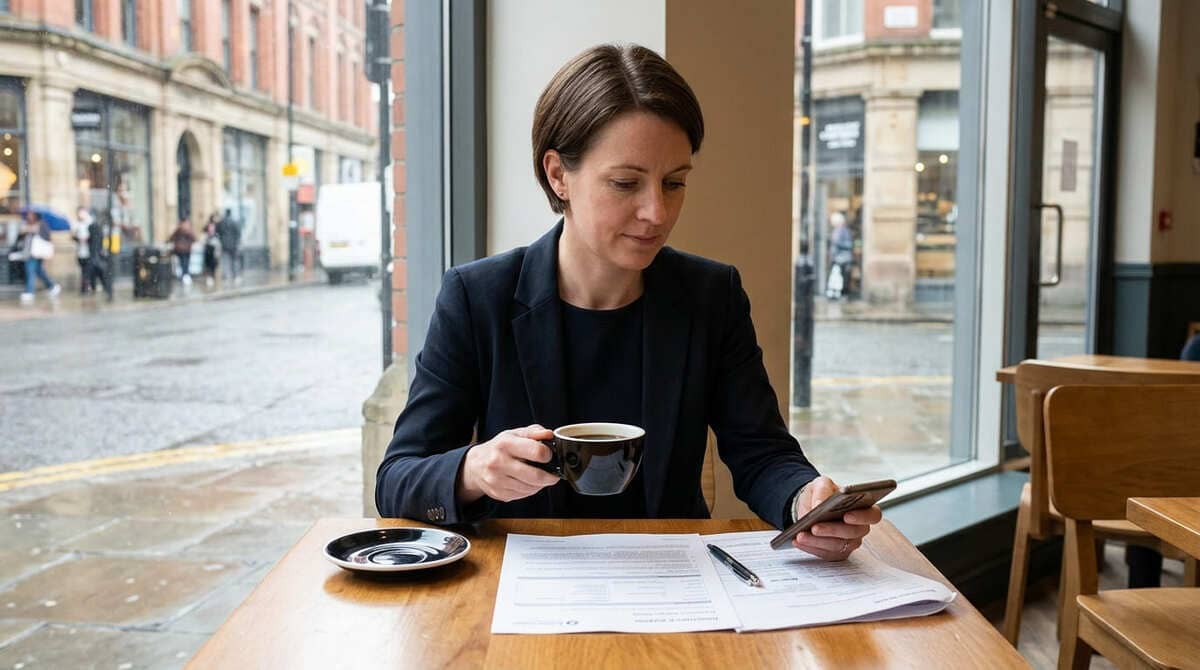
Catherine was forty-two years old, the kind of woman who loved and understood order. She worked for an insurance company in Manchester and had always considered herself practical, vigilant, and not naive. Having grown up alone, she had learned early on to listen to her instincts. But on this Tuesday morning, while she was drinking a coffee in a busy shopping mall, that inner alarm system failed her.
The woman was in her early thirties, dark-haired, with a face that expressed—or seemed to express—weariness and worry. She spoke with a slight accent, possibly Eastern European, possibly anywhere. She explained that she had to call from home, that her own phone had no reception, that her mother was there, that it might be an emergency.
Catherine, who would later admit that she was too helpful, that she was the kind of person who couldn't ignore the needs of others, handed over her phone. The device was unlocked—she trusted the crowd of passersby, the public nature of the place. She sat next to the woman, drank her coffee, and waited.
The woman spoke quickly, in a language Catherine didn't understand, her eyes fixed on the screen. One hand held the phone, the other moved across the keyboard. Quick, small gestures. Professional. Routine.
When the woman handed back the phone, she seemed both grateful and scared. „Thank you,“ she said. „Thank you very much. My mother… she’ll be fine.“ Then she was gone, swallowed up by the crowd.
Catherine didn't think much about it. She picked up her phone, finished her coffee, and went to work.
The story that unfolded afterward is one that Adam Dalgliesh, had he investigated it, would have understood as a symptom – not as a crime alone, but as a revelation of a world in which trust had become a luxury that the poor could not afford and the rich did not understand how to protect.
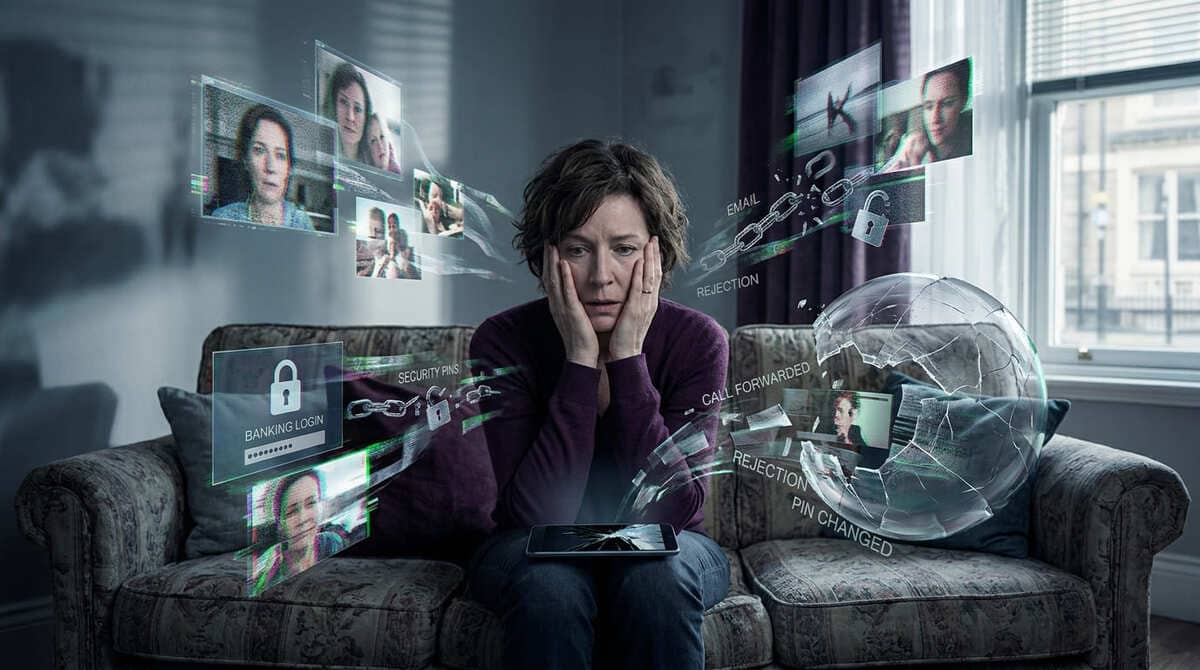
The next morning, Catherine tried to log into her online banking account. The password didn't work. She tried again. Rejection. She called her bank—a routine she'd known for fifteen years. And that's where the disorientation began.
The bank confirmed that call forwarding had been set up on her account. All future calls to her registered number would be redirected to another line. And that wasn't all: someone had tried to access her email, changed her security PIN, and hacked into her cloud storage, which contained her personal photos.
Catherine sat on her couch that Wednesday morning, trying to understand what had just happened.
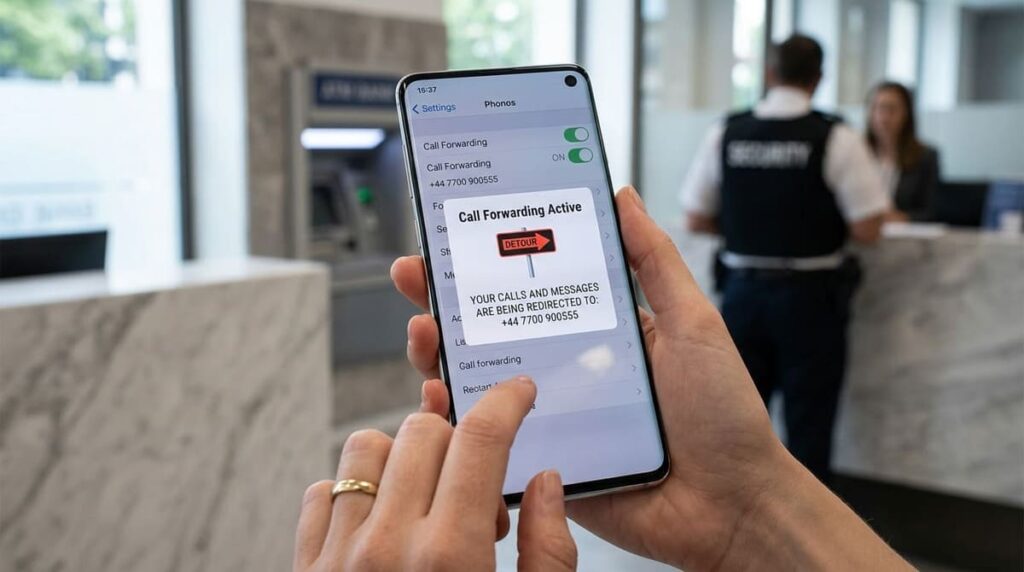
The phone wasn't just a phone. That was what she slowly grasped as a bank security officer explained what the woman had done. A modern smartphone is a portal—to bank accounts, email addresses, authentication codes, the layers of an identity so carefully constructed. In those few minutes, the woman hadn't just dialed Catherine's numbers. She had accessed the settings, manipulated phone configurations, and enabled call forwarding options.
Dalgliesh should have asked—he should have asked—why the woman had chosen this path. Not the raw violence of a robbery, not the outright deception of a fake website, but something more subtle. Something that required trust.
Because trust is easier than force. Because a stranger who asks politely is a greater weapon than one who robs. Because the security systems of the modern world assume that the physical possessor of a device is its owner—and that an owner does not sabotage their device. It was an assumption so deeply ingrained in the architecture of our world that no one questioned it until it was too late.
Catherine wasn't stupid. She wasn't careless, not in the usual sense. She was human. She responded to a request because that's what humans do—they help. And because in modern life it has become impossible to distinguish between caution and cruelty. If you distrust every stranger, you are isolated. If you trust everyone, you are vulnerable.
The subsequent investigation—brief and ultimately unsatisfactory—revealed that this was not an isolated incident. The woman belonged to a network. She was young, possibly an accomplice, possibly even coerced herself. The police could not find her. The accounts to which the money had been transferred had already been emptied.
Catherine spent three weeks locking her accounts, changing passwords, and fighting with her bank over liability and responsibility. Most of the money was refunded—a fact that, strangely enough, didn't reassure her. The money wasn't the problem. The problem was the feeling of intrusion, the certainty that a stranger had invaded her digital life, that this stranger—perhaps even now—knew things about her, had access to her pictures, to private emails, to the layers of her existence.
Today, months later, Catherine is more cautious. She always locks her phone. She doesn't lend it to strangers, not even for three minutes. She has set up two-factor authentication. She regularly checks her account settings.
But she's also lonelier. She answers strangers' requests with "no." She ignores people who seem to be in need. She's learned that trust is a weapon that can be used against you, and that sometimes it's better not to be helpful than to be vulnerable.
The woman – the network – did not win in the traditional sense. But they changed Catherine in a way that the network perhaps intended: they made her distrustful, cautious, more isolated.
Perhaps this is the deeper theft – not of money, but of the ability to help, of the confidence that others are good.
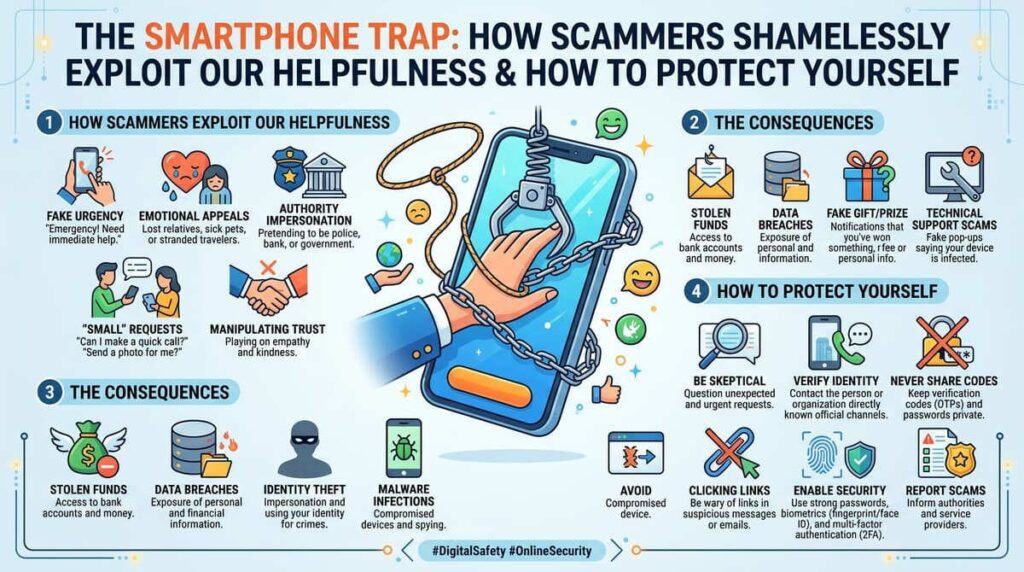
Would you have refused the phone? Would you have distrusted a stranger whose voice was pleading, whose story didn't seem implausible? Or would you – like Catherine – have reached out and handed over the device, because that's what people do?
And if you had refused – would you feel guilty if this stranger had truly been in distress?
That's the loophole into which the fraud creeps.