






Subscribe to Newsletter
Enter your email address below and subscribe to our newsletter

You are the investigator

July 2026: Billion-dollar fraud at major banks, AI-powered deepfakes, emotional telephone manipulation and global credit card networks — Germany is facing a new wave of complex financial crime.
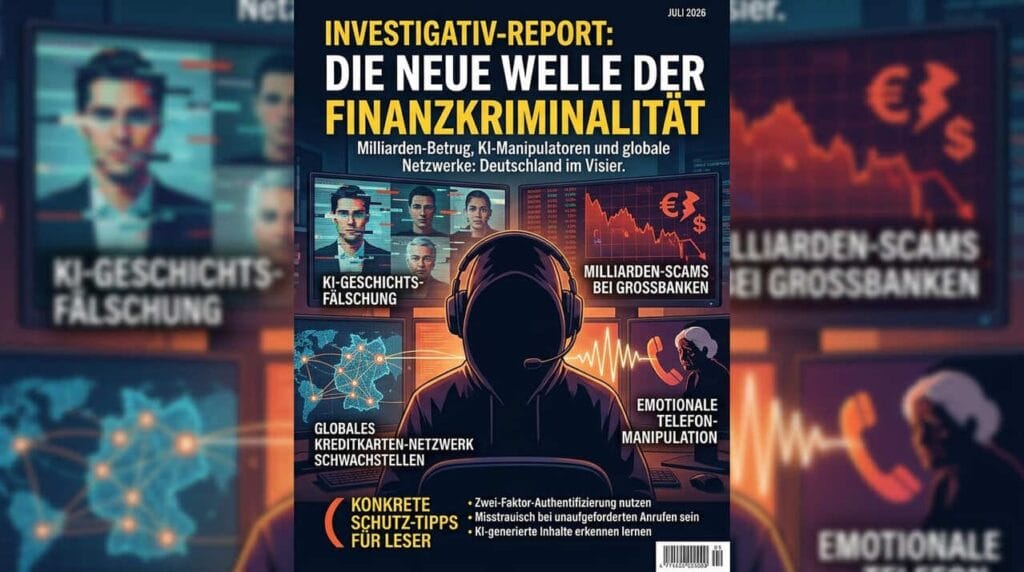
July 2026: Billion-dollar fraud at major banks, AI-powered deepfakes, emotional phone manipulation, and global credit card networks—Germany is facing a new wave of complex financial crime. This report examines current cases, explains the background, and provides concrete protective advice for readers. July 2026 Investigative Report
BaFin has confirmed: German banks, insurance companies and other financial institutions are contributing around Costs of 7 billion euros as a result of their involvement in Cum-Ex and Cum-Cum tax fraud schemes. But what's behind it?
In these transactions, shares were traded back and forth around the dividend record date in such a way that capital gains tax was refunded multiple times by the state—even though it had only been paid once or not at all. This mechanism cost the German treasury billions over decades.
Investigations are in full swing nationwide. Tax investigators, public prosecutors, and international authorities are working together to bring those responsible to justice. In the end, taxpayers will foot the bill—through less money for schools, hospitals, and infrastructure.
Shares were traded multiple times between buyers and sellers shortly before the dividend record date. Several parties simultaneously applied for a refund of the capital gains tax—even though the government had only received it once.
Foreign investors lent their shares to German institutions before the cut-off date in order to collect a tax refund to which they were not actually entitled.
for the German financial sector according to BaFin
Banks, insurance companies and funds under suspicion
Proceedings have been ongoing for over a decade
At the end of July 2026, tax investigators again searched the headquarters of Deutsche Bank in Frankfurt — this time in connection with suspicious Cum-cum transactions of Postbank from the years 2008 to 2010. The estimated total damage to the treasury amounts to approximately 28 billion euros nationwide; this complex alone is supposed to cover 350 million euros be.
Deutsche Bank took over Postbank completely. With this acquisition, it inherited not only customers and branches, but also potential legal liability for transactions that had been conducted under the Postbank umbrella for years.
Tax investigators can sometimes trace transactions back up to ten years or more. Digital evidence, witness statements, and international legal assistance make it possible to completely reconstruct transactions from 2008–2010.
Emails, internal memos, business records, and server contents are being seized. At the same time, prosecutors are questioning former employees and cooperating with European authorities.
In July 2026, security authorities registered an alarming increase in organized fraud methods that specifically utilize artificial intelligence. Two cases exemplify a nationwide threat.

An alleged "court employee" called an elderly couple and claimed that a family member was in custody. After paying "bail," the victims handed over cash, jewelry, and valuables to a "collector." The damage was considerable, and the perpetrators fled.
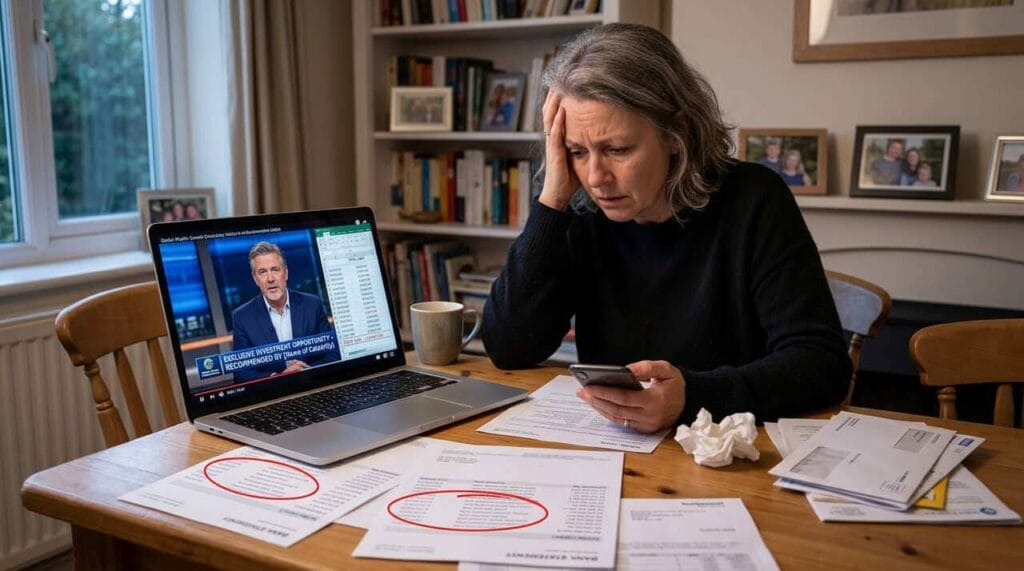
A woman trusted AI-generated promotional videos in which well-known personalities supposedly recommended an investment platform. After several transfers, she lost over [amount missing]. 1 million euros. The videos were deceptively real — computer-generated, but hardly distinguishable from real faces.
Authorities will NEVER request bail payments or the handover of cash to strangers over the phone. Hang up immediately and call the police on 110.
Whether it's a shock call, a deepfake video, or fake government agencies—perpetrators always use the same psychological tools: time pressure, fear, and trust. Those who know the warning signs can protect themselves.
„"You must act NOW!" — No reputable government agency, bank, or court will pressure you over the phone. Hang up and take a deep breath.
Look for unnatural mouth movements, blurred hair edges, and a lack of facial expression. Manually search for the video on the person's official website.
Check financial products on the BaFin website (bafin.de). Reputable providers are registered and transparent about risks.
Speak to relatives, friends, or a consumer advice center before transferring or handing over any money.
An elderly couple from Bayreuth lost around 330,000 euros through one of the most gruesome scams: the so-called "shock call with a sick relative." Scammers claimed that the couple's daughter was seriously ill and urgently needed expensive medication from abroad.
Under enormous emotional pressure and fear for their child, the elderly couple acted quickly—and handed the money over to an unknown "collector." The case demonstrates how criminals systematically exploit psychological vulnerabilities.
The Karlsruhe Public Prosecutor's Office has filed charges against a woman who at least 24 victims This resulted in a total of approximately 1.2 million euros Investing in financial products that simply didn't exist. A classic case of online investment fraud — professionally orchestrated, brutal in its consequences.
The pattern is always similar: Victims are lured in by eye-catching advertising promising unrealistically high returns. A professional-looking platform displays supposed profits—until the money is gone forever.
Check each financial provider at bafin.de/datenbanken Before you invest. If the provider is missing from the list, extreme caution is advised.
In Central Saxony, one woman transferred a total of over 1 million euros to various accounts — lured by AI-generated videos in which well-known personalities supposedly promoted an investment platform. The videos appeared deceptively real.
This is not an isolated incident. Deepfake technology is now so sophisticated that even technically savvy people cannot immediately recognize the forgery. Combined with social media advertising algorithms that specifically target people interested in investments, this creates a dangerous mix.
Scammers place advertisements on platforms like Facebook, YouTube, or Instagram — specifically targeting users who are looking for investments.
AI tools generate compelling videos featuring the faces of well-known politicians, presenters, or entrepreneurs — without their knowledge or consent.
Victims are directed to deceptively realistic investment platforms. Initially, even small profits are paid out to build trust.
Once larger sums have been deposited, withdrawals are blocked and the platform disappears. The money is usually irretrievable.
The Financial Intelligence Unit (FIU) recalls one of the largest credit card fraud operations in German history: „Operation Chargeback“. Millions of fraudulent online subscriptions were billed – the damage amounts to approximately 300 million euros, are affected 4.3 million people in 193 countries.
Digital banks like N26, Revolut, or Wise allow for quick account opening with fewer verification procedures. For fraudsters, this means easier money laundering, more difficult-to-trace transactions, and international reach.
„Operation Chargeback“ was not a local phenomenon: The perpetrator networks operated from several countries simultaneously, using shell accounts and cryptocurrencies to conceal the money flows.
Millions of account holders discovered unknown small withdrawals. Many only noticed the fraud months later — chargebacks were systematically delayed or blocked.
The Berlin public prosecutor's office has filed charges against four former managers of the Signa Group for illegal money transfers and embezzlement amounting to millions of euros. At the same time, the Austrian Supreme Court (OGH) upheld the convictions of... René Benko due to insolvency fraud.
The Signa Group was considered one of Europe's largest real estate and retail empires—with department stores, luxury hotels, and office towers. Its collapse reveals how political entanglements, opaque structures, and aggressive debt financing can bring down a seemingly unshakable structure.
Not all fraud cases occur in major cities or financial corporations. Two recent cases show that criminals are active everywhere — and that ordinary people can become victims.
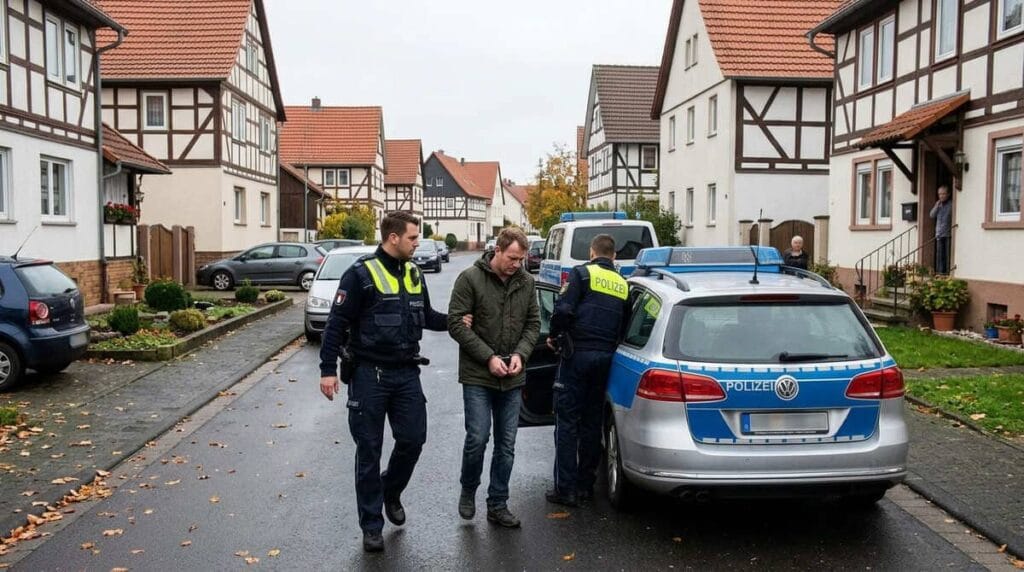
Police in the Wetterau district arrested a 38-year-old suspect who allegedly defrauded investors with fictitious or massively overvalued investments. The case serves as a reminder: such perpetrators are not anonymous—they often live in the neighborhood. And for every convicted fraudster, there are dozens of cases that never make the headlines.

In the Hildburghausen district, a woman claiming to be a "bank employee" called a man and asked him to confirm his account details for "security reasons." The result: approximately 35,000 euros were debited. Social engineering in its purest form — no technical knowledge required, just a convincing voice and the right script.
Real banks ask never If you receive a call asking for your PIN, TAN, or password, hang up immediately and call the official bank hotline yourself.
July 2026 has shown that financial crime is not an abstract problem for large corporations and authorities. It affects elderly couples in Bavaria, savers in Saxony, bank customers in Thuringia—and potentially every one of us. The perpetrators' methods are becoming increasingly sophisticated; AI is making forgeries almost perfect. This makes it all the more important to remain informed, critical, and vigilant.
Whether it's an investment offer, a call from a government agency, or a message from your bank—take your time. Reputable organizations never pressure you to act immediately.
Call banks and government agencies back using official numbers. Never click on links in suspicious messages or advertisements.
Shame is misplaced — anyone can be a victim of fraud. Inform family, friends, and neighbors about current scams.
Every report helps investigators identify fraud patterns. Contact the police, consumer protection agency, or BaFin.
Fraud thrives in secret — education and transparency are its most effective antidotes. Stay informed, stay skeptical, stay safe.