





Subscribe to Newsletter
Enter your email address below and subscribe to our newsletter

You are the investigator

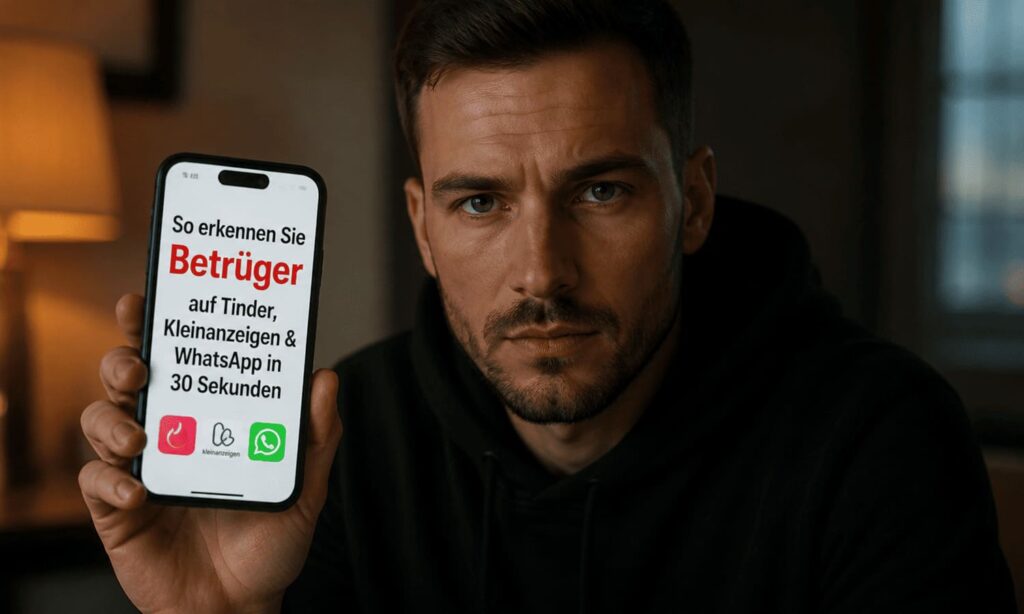
Do you want to know if your new business partner is reputable?
Is your date really single?
Or whether the potential roommate has a clean past?
Previously, you needed an expensive private investigator for this (often €800–2000). Today, you can use publicly available sources and clever OSINT methods. professional reviews Do it yourself — legally and cost-effectively.
In this comprehensive guide, I will show you the complete process that will allow you to thoroughly screen almost any person by 2026.
Fraud, false identities, and hidden problems are commonplace. Whether dating, renting, dealing with business partners, or making new friends—a thorough background check protects you from financial losses and disappointment.
Important: Everything you learn here is based on publicly available information. Illegal methods (hacking, stalking, spying) are punishable by law.
Tools: The Local Directory, 11880.com, Google
""Name" "Managing Director" OR "Owner""Create an overview: green, yellow, and red flags. Then make a conscious decision.
Pro tip: Combine the tools. A single tool is rarely sufficient.
Example 1 – New Partner
A woman checked out her new boyfriend. Using PimEyes and WhatsMyName, she found out that he was still married and living under two names.
Example 2 – Business partners
A man wanted to start a company with someone. In the commercial register he found two old bankruptcies — the deal fell through.
Example 3 – Roommates
A student discovered through social media and old posts that the applicant had repeatedly attracted attention for disturbing the peace.
A sure rule: Use this information only for your own decision-making and then delete it.
Question: How much does a professional self-assessment cost?
Answer: With the aforementioned tools, usually under €20–50 (for PimEyes Premium).
Question: Is it really possible to find everything?
Answer: Yes, in 80–90% of people. Extremely cautious or very private individuals are more difficult to screen.
Question: Is it morally justifiable to test someone like that?
Answer: Yes, when it comes to your safety, money, or children. Transparency protects both sides.
Question: What do I do if I find something bad?
Answer: Gather evidence, break off contact, and decide whether you want to confront the person.
Question: Do I need programming skills for this?
Answer: No. Most tools are user-friendly.
Conducting a professional background check is no longer rocket science. With a systematic approach, the right tools, and some time, you can achieve results that previously only expensive private investigators could deliver.
The most important finding:
Trust is good — but informed trust is better.
Use this knowledge responsibly. Not for spying, but to protect your future, your money, and your heart.
Further links:
You are the investigator.
Now you have the tools — the rest is in your hands.